To celebrate our current exhibition Carry the Clouds Away, Art Collection Team Assistant Keira Marchant has interviewed featured photographer Liam Ratcliffe. Read below to learn about Liam’s photographic practice, inspirations and visions behind his new body of work titled In My Own Strange Way which you can see now by heading down to the New Adelphi Exhibition Gallery (open Weekdays 10am-4pm, excluding bank holidays).
- Could you give us a quick introduction to yourself and your photography practice?
I’m a photographer working with traditional analogue practices. I primarily work with slow, medium and large format cameras and print my photos chemically in the darkroom, whether it be colour work or black and white.
- The range of colours and tones across the different seasons is a really striking part of these images, how does your process when capturing the photographs interact with your development and printing process in the darkroom?
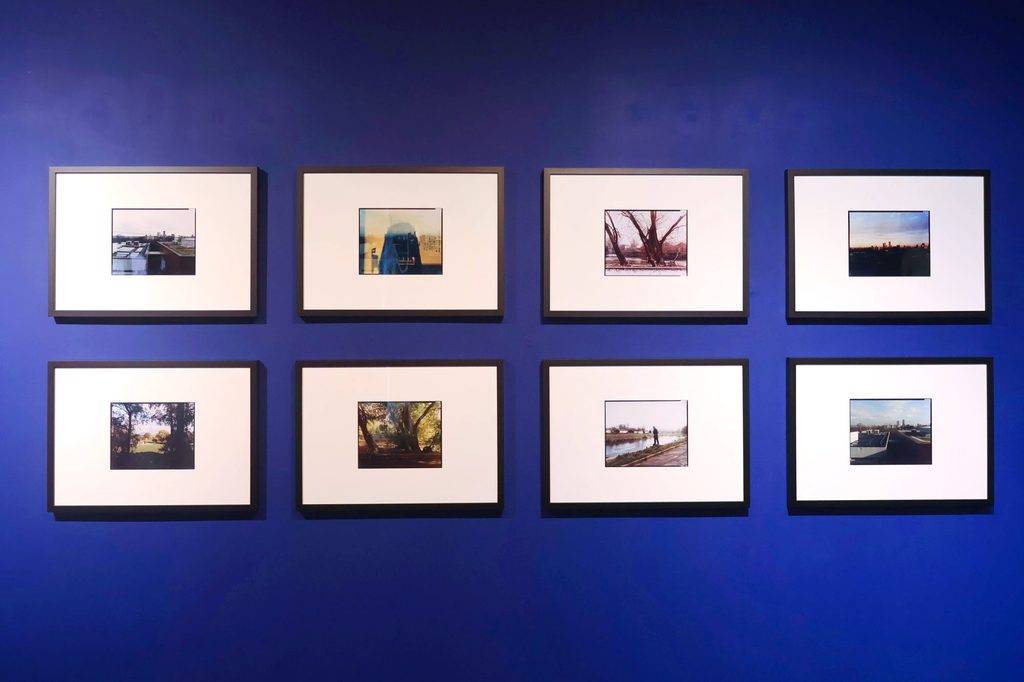
I tend to make notes as I’m shooting, notes on the specific colours in the scenes in front of me. I then try match the colours when printing the photos in the darkroom to be as close as I can remember going off the notes I made. I don’t go into great detail, just enough to remember what I saw and felt when I was stood there taking the photo. For example, the photo of the city skyline during sunset has a really subtle warm glow on the horizon that fades into soft and then deep blues. Though this was taken in winter, it has both warm and cool tones throughout. My overall aim when printing this photo was to make sure that the soft warm glow on the horizon behind the skyline was as accurate to how it was in real life. I did this by letting the exposure fall to wherever it needed to be to bring that warm red/orange glow out, even if it meant losing some of the foreground details to deep shadows, while at the same time making sure that the little details that are left in those foreground shadows are on the cooler side, as a reminder that this is a cold winter late afternoon/early evening photo.
- What do you find inspires your photography, across this project and others?
With this project in particular, the thing that kept me coming back and going was how different the subjects I was photographing in and around Peel Park, though almost always the same, were always in some way different. Whether it be the time of year or time of day or the change in weather conditions, I felt like there was always something new to the same repeated photo I was taking. This also applies to how I generally work on other projects too; I work slow, over long periods of time and often re-photograph the same scenes over and over again. It’s how the same subject or place can look and feel in different seasons, weather and over time that interests me. This is how I keep inspired to keep the projects going.
- What would you like audience members to gain from viewing In My Own Strange Way?
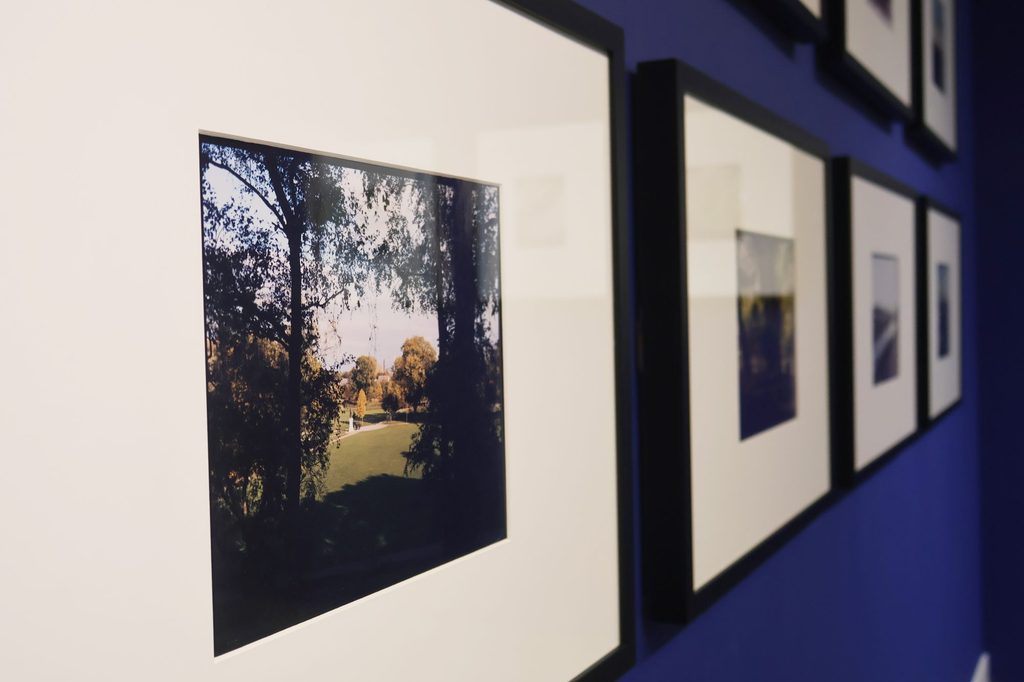
That you can visit the park on a winter’s day and on a summers day and have the same walks, on the same paths, but the experience be completely different. To notice things that you only see in winter due to lack of leaves on trees and bushes, such as; houses, buildings and the Manchester skyline in the distance compared to summer when the trees are in bloom and the park feels more enclosed and secluded, or autumn when you pay attention to nothing else other than greens turning into a mix of reds, yellows, browns and golds. The same location can feel like different place each time depending when you go.
- Has working on In My Own Strange Way impacted how you see and think about greenspaces in urban areas?
Coming from Glossop, a small countryside town, I have always been surrounded by green spaces, from parks, fields, farms and hills leading out to the peak district. During photographing around Glossop (this can relate to working in Peel Park also) I found that over the years the green spaces were getting smaller and sometimes to the point that they no longer exist. Talking about green spaces in Glossop specifically, particularly over the last 3-4 years, I have unknowingly documented the destruction of multiple green spaces so that warehouses and new housing estates can be built on them. Looking over the entire archive I have created of Glossop landscape photos, I have photos of the same place, from the same perspective (just like In My Own Strange Way was shot), in one year the photo is of a field and 5 years on it’s a row of houses. In my own personal opinion, I don’t see this being the best idea for the overall landscape, because at the rate they are doing this, there will be hardly, if not any, green spaces left at all. Through my photos I hope people will see that the green spaces which existed before all of the new builds and warehouses was in fact already important and good enough.
- What do you envision for the future of your photography practice after the completion of this project?
For this project specifically, I plan on turning it into a photobook featuring all the photos taken over the course of the one year I was shooting. I’m also thinking of an exhibition that features all the prints from the project in one space. Other than this project, I’m also working on a photobook project of landscape photos of Glossop that I have been taking for 10 years now. This work is also centred around one specific place, photographed over and over, in the same style as In My Own Strange Way but over a longer period of time.
Liam’s work will be on display until the 18th December 2026. Keep an eye on out socials (Instagram: @uos_artcollection) for future curator tours, workshops and open calls for Carry the Clouds Away.
Liam would like to dedicate the work from his project In My Own Strange Way to the memory of Kyle Mayo. A fellow Salford Alumni, photographer and friend.
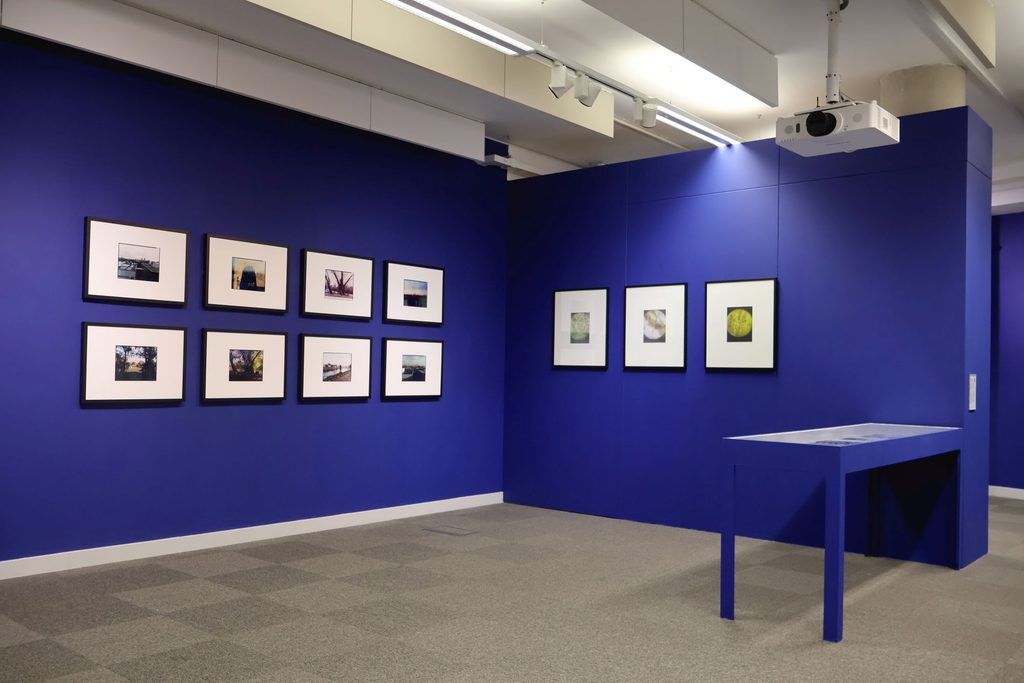
Gallery photography courtesy of Cami O’Hagan and Keira Marchant