Team assistant Cami O’Hagan reflects on their day visiting Belfast’s contemporary art scene – making the most of their time here before moving back to Manchester.
On Thursday 11th December I got the train to Belfast to explore the city’s artistic side. As a self-guided experience, I was able to pace the structure of my day focusing on the galleries I wanted to visit while simultaneously being able to enjoy exhibitions I hadn’t planned to see.
Oliver Jeffers: Disasters and Interventions
First on my list; Disasters and Interventions a solo show by internationally established artist Oliver Jeffers at The Naughton Gallery, Queens University. Having seen this advertised, as someone who highly appreciates artwork produced through collage, I was immediately drawn to this exhibition. Showcasing a series of artworks, Jeffers has intervened with 20th century portraiture, landscape paintings and photographs, exploring the issues of the modern world through instability, ignorance, and resilience.
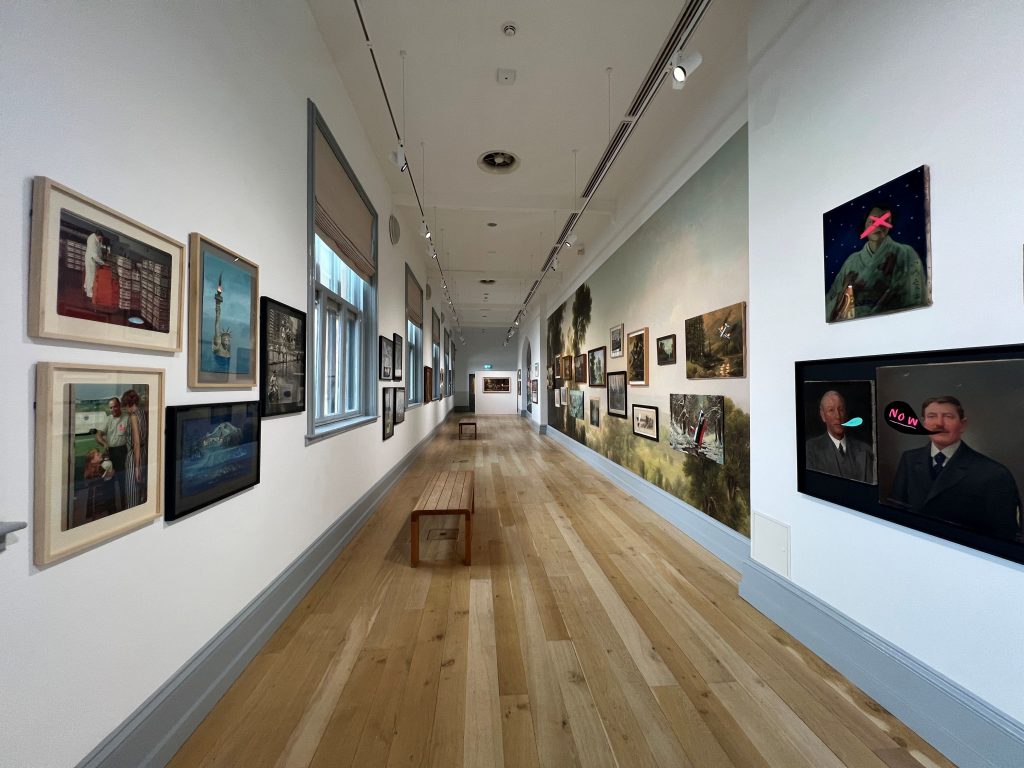
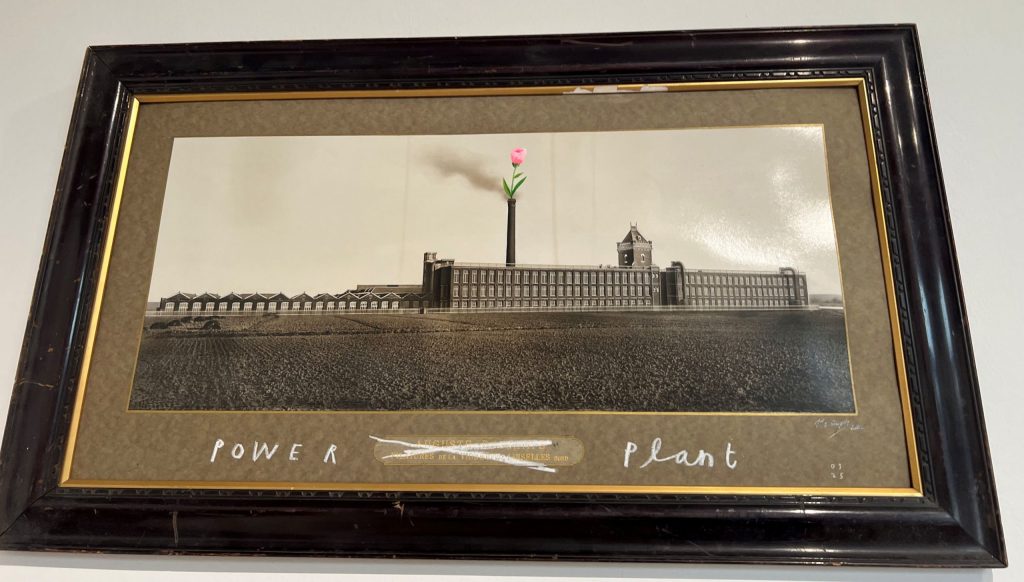
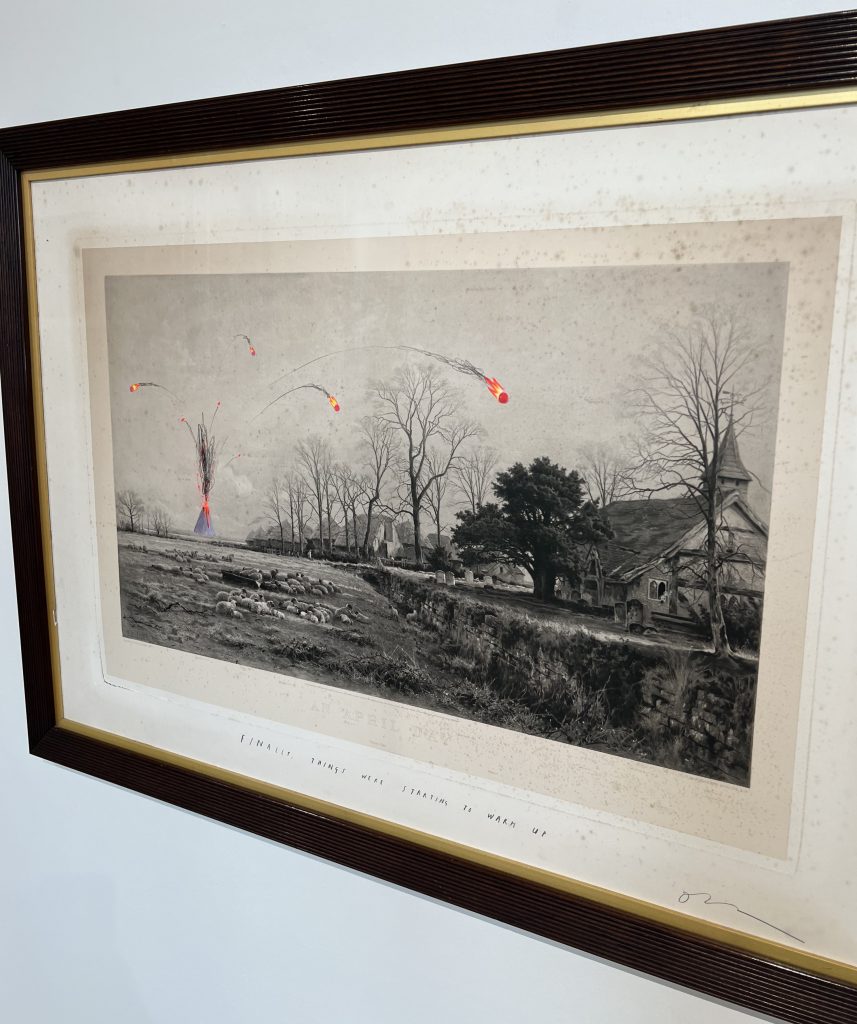
Created over the last 15 years, this body of work challenges the long-established collage method of cut and stick. Jeffers interrogates found imagery by introducing new characteristics that reframe the entirety of the original narrative. The choice to add such striking and detrimental elements to peaceful landscapes they become cataclysmic scenes, with a hint of satirical humour.
The play on words in Power Plant with a miniature flower painted growing out of a industrial power factory, alongside Finally Things were starting to warm up a volcano has erupted near a small village – lava flying towards sheep that appear to be unamused. I find these scenes to be both subtle and destructive, echoing the lack of urgency towards addressing the earth’s climate crisis. Although this topic is serious and sometimes possibly quite stressful at the thought of man-made climate disasters – I believe the subtlety creates a sense of amusement to remind us it’s not all doom and gloom.
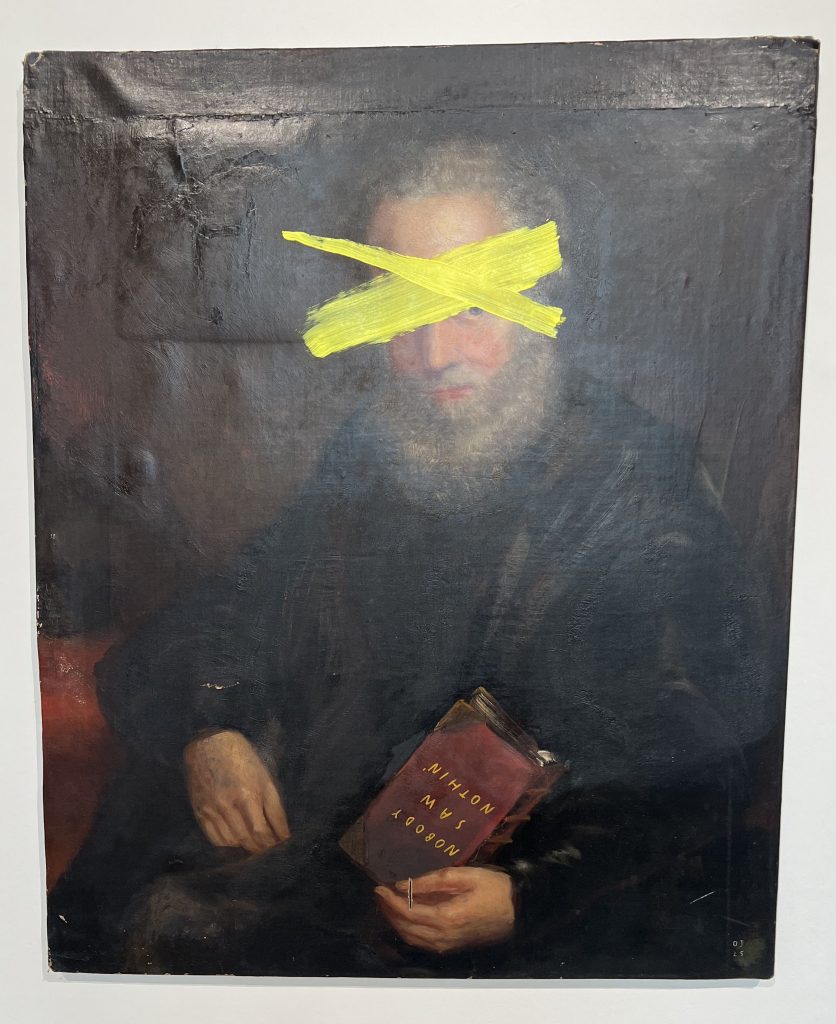
In Nobody Saw Nothin’ Jeffers offers us mischievousness through what was a grand old portrait painting, now I am drawn to the sitter’s eye sneakily peering at the audience, the other covered by thick strokes of yellow paint and the words ‘Nobody Saw Nothin’ etched into his book. This technique summons us to consider the vanity in human behaviour or… human performance in the digital era, which to me feels like a hint to the fragility of the world we currently live in.
I highly recommend visiting this exhibition if you are in the Belfast area, This expertise in being able to tap into our common instincts in order to create opportunities, producing evocative narratives, and allowing us to engage with complicated and delicate issues on a mindful level. My experience in viewing Disasters and Interventions provided me with a welcomed chance to pause and reflect during what feels like a very unpredictable time.
Marie Hanlon: Water – More or Less
My next discovery was a happy accident! I had planned on going straight to Golden Thread Gallery but stopped at The Metropolitan Art Centre (MAC), on my arrival I was met with the choice of four different exhibitions all different types; painting, sculpture, film and installation.
I was gripped most by Water – More or Less by socio-political artist Marie Hanlon, a three part installation show which gives a discourse to the different characteristics of water stress. The physical elements of this exhibition push past the traditional restraints of the gallery wall in order to address the unpleasant facts of water treatment, flooding, and drought.
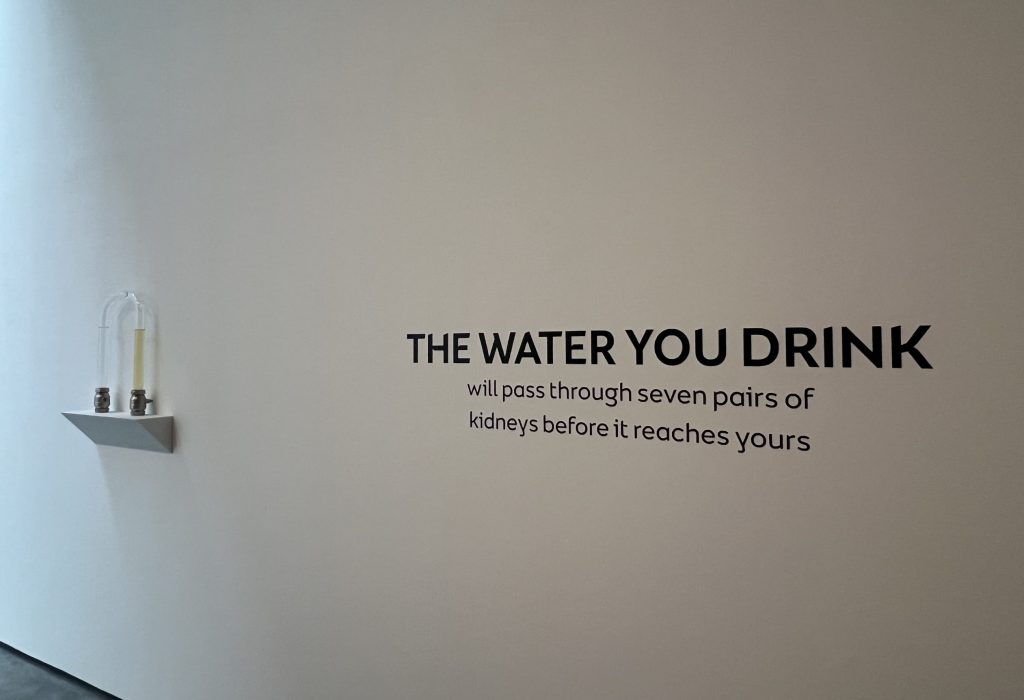
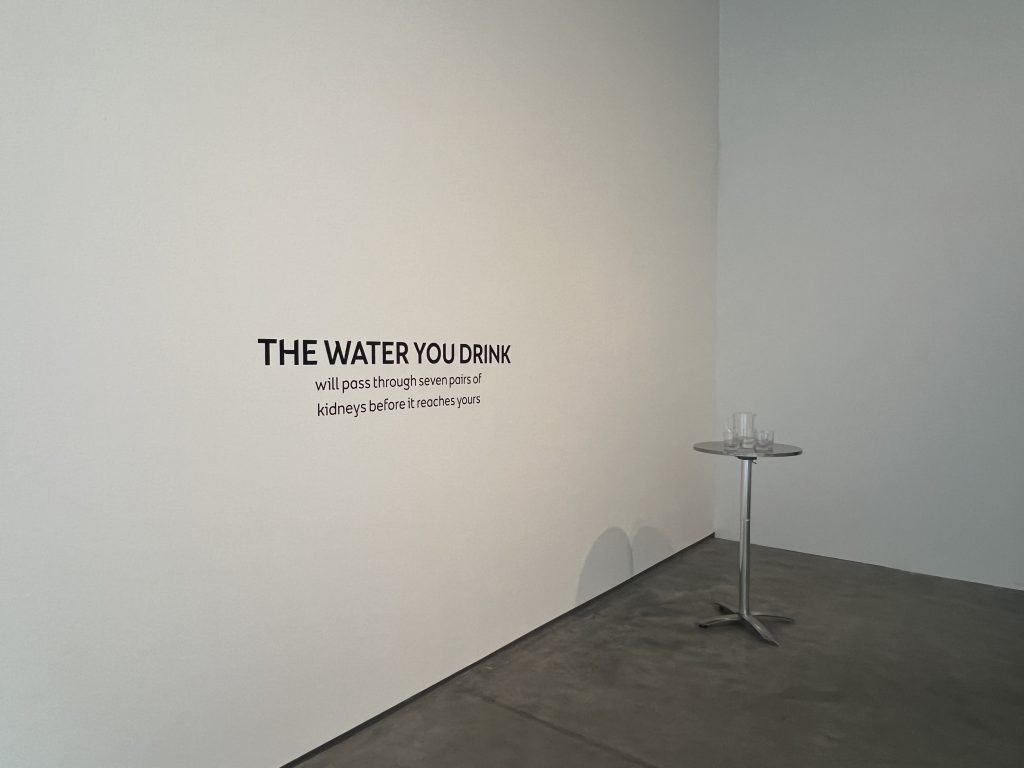
The Water You Drink underlines the harsh realities of water treatment during a climate crisis. Comprised of wall text stating ‘the water you drink passes through seven pairs of kidneys before it reaches yours’. Either side of the wall text, a glass unit with plumbing fixings holding what looks to be water and urine, and a table with a jug of water and glasses on top, visualising the journey of drinking water in today’s world alongside the negative impacts of rising populations.
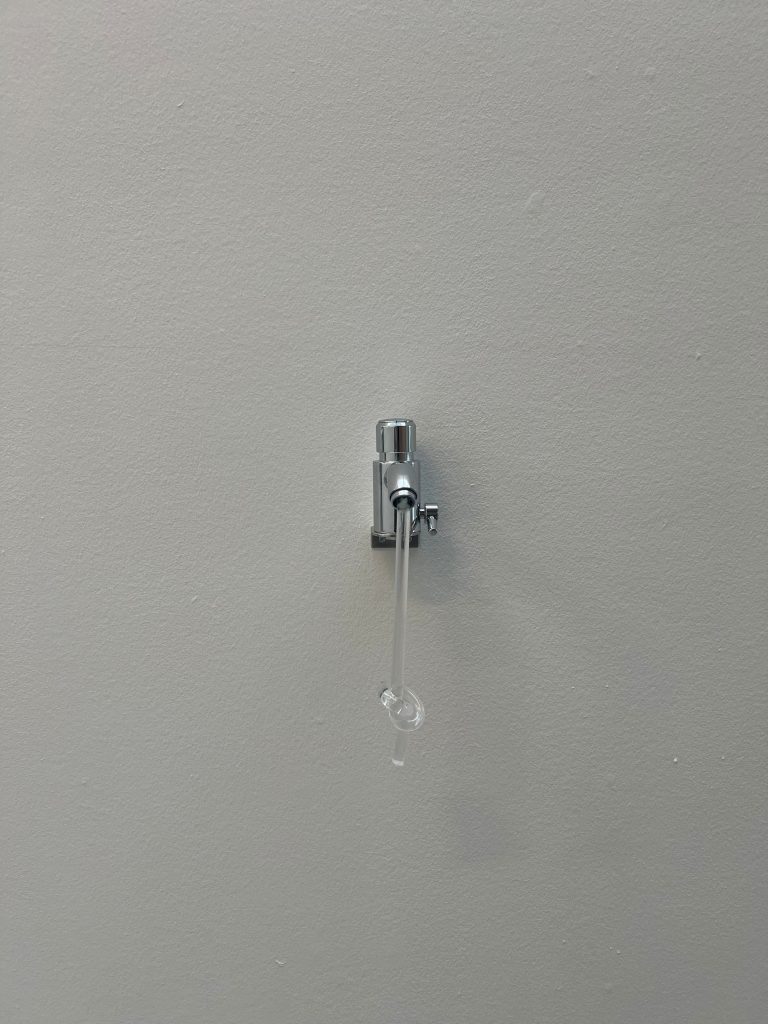
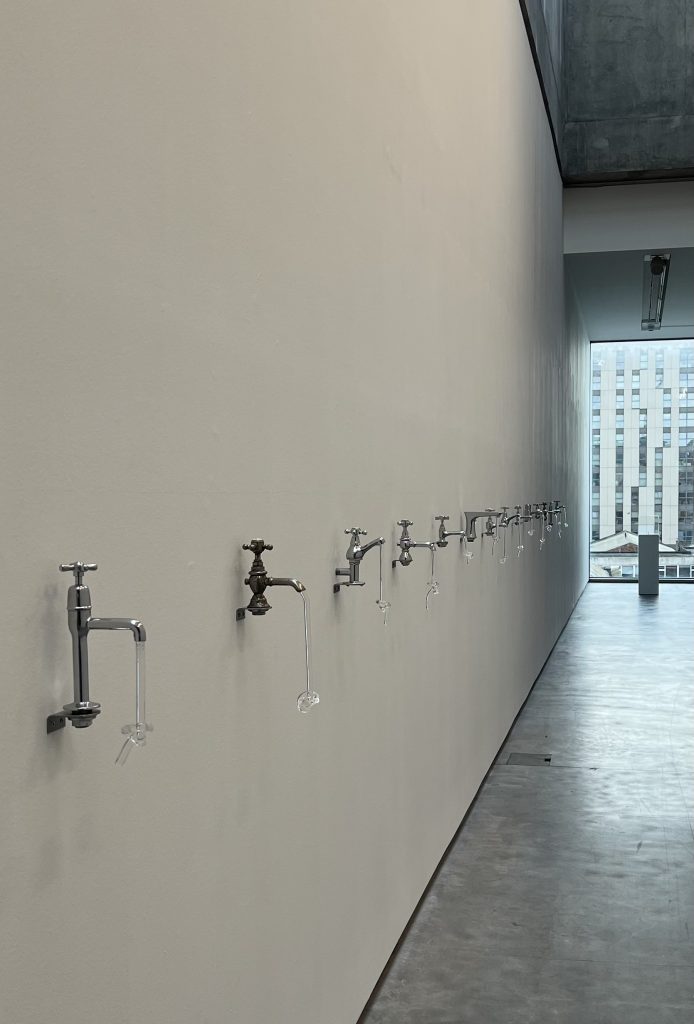
The impressive installation of taps with knotted plexiglass flows in Cut Off raises my thoughts to the unreliable condition of domestic water in parts of the UK and Ireland. Cut Off amplifies the barriers to having a safe and lasting water supply, as we reach extreme heat conditions in the summer, water droughts are becoming more and more common. The physical nature of this piece is what draws my attention most – the knotted plexiglass is a symbolic reminder that England’s water supply isn’t really domestic. Through privatisation, and antiquated infrastructure that needs a major upgrade, this piece is both metrical and political in prompting the world’s disproportionately distributed and finite water supply.
It is exhibitions like this that leave me with a chilling sensation, the artwork and facts are unseeable, the message has been fabricated in such a way that is raw, innovative, and educational – the earth’s water cycle is in danger and will affect everyone no matter what status you have.
The Border That Crossed Me : Azzedine Saleck
Last but not least, I reached Queen Street where my current favourite art space in Belfast is situated; Golden Thread Gallery. The last couple of times I have visited this gallery, every single exhibition presented here has shook something inside of me – I had been anticipating great things before visiting again, and without fail my expectations were exceeded.
Displayed in the upper gallery The Border That Crossed Me, a collaborative show including work by artist and poet Azzedine Saleck, this exhibition focuses on the emotive and politicised landscapes of segregated areas around the world. Zooming in on locations such as the Mexico-US border, Belfast Interfaces (Peace walls), the Eurotunnel zone near Calais, France, and the border between the Dominican Republic and Haiti.
Touching on the themes of modern day surveillance, border infrastructures, and climate-related displacement. What intrigued me most was the multiple points of visual and auditory communication that confronts these themes through both Western and Eastern lenses; video installations, textiles, and ceramics all including contemporary narratives from people who are central to these geographical arrangements.
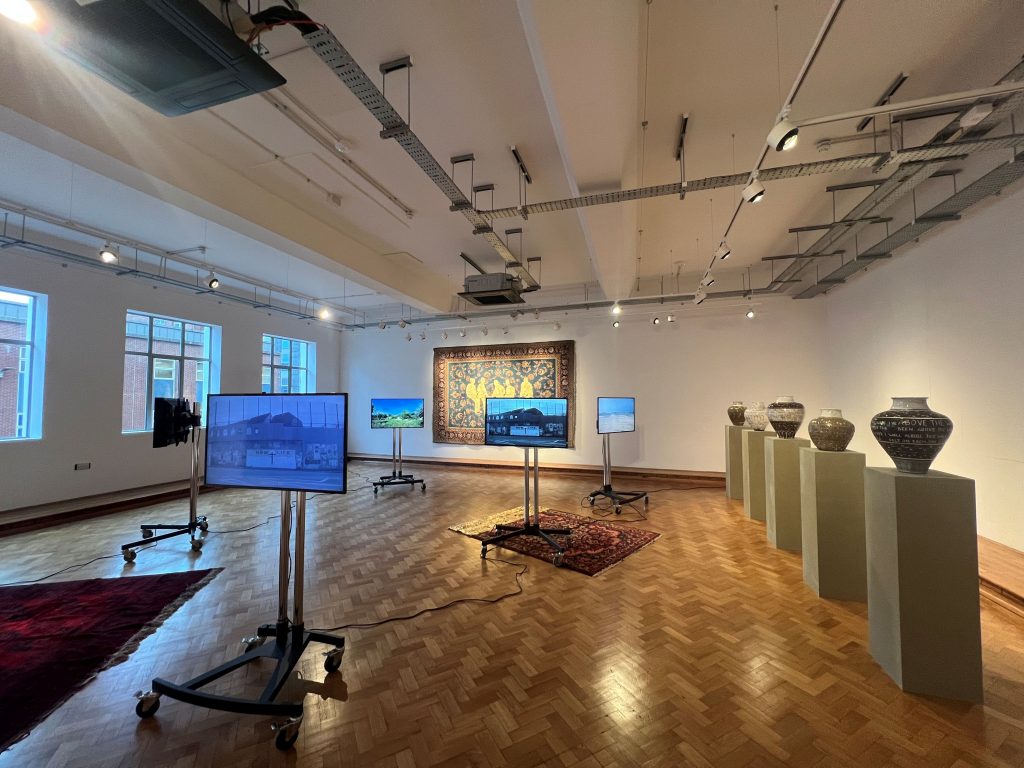
Central to the exhibition is a layered video installation, where you are directly met with the focal co-creative strand of the display. Over five television screens with scenes of border walls and fences at borders combined with responsive text that was produced in workshops by young people who live on either side of these divided areas. Some responses highlight stories of facial recognition systems, displacement, anticipation, and resistance.
In my opinion this was a crucial choice to place this video installation in the centre, as it reflects where we are in terms of the rapidly fast advancement of technology, especially within travel, infrastructure, and border security. It makes me pose the question – is this technology helping us advance regarding safety, or is it just here for control?
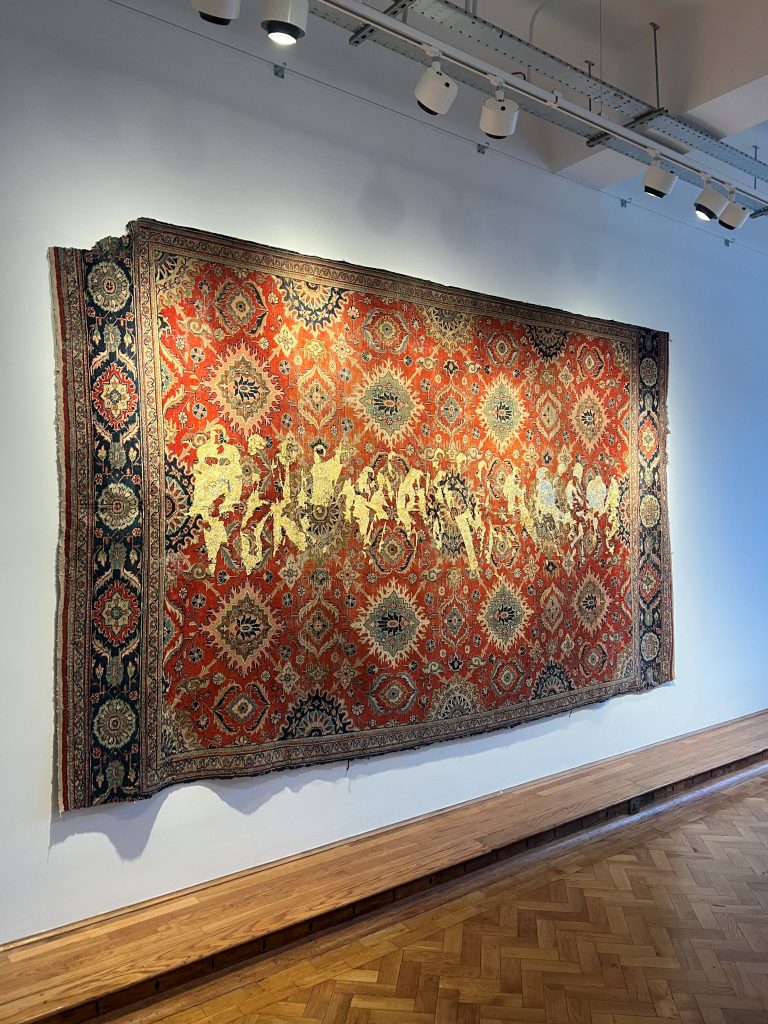
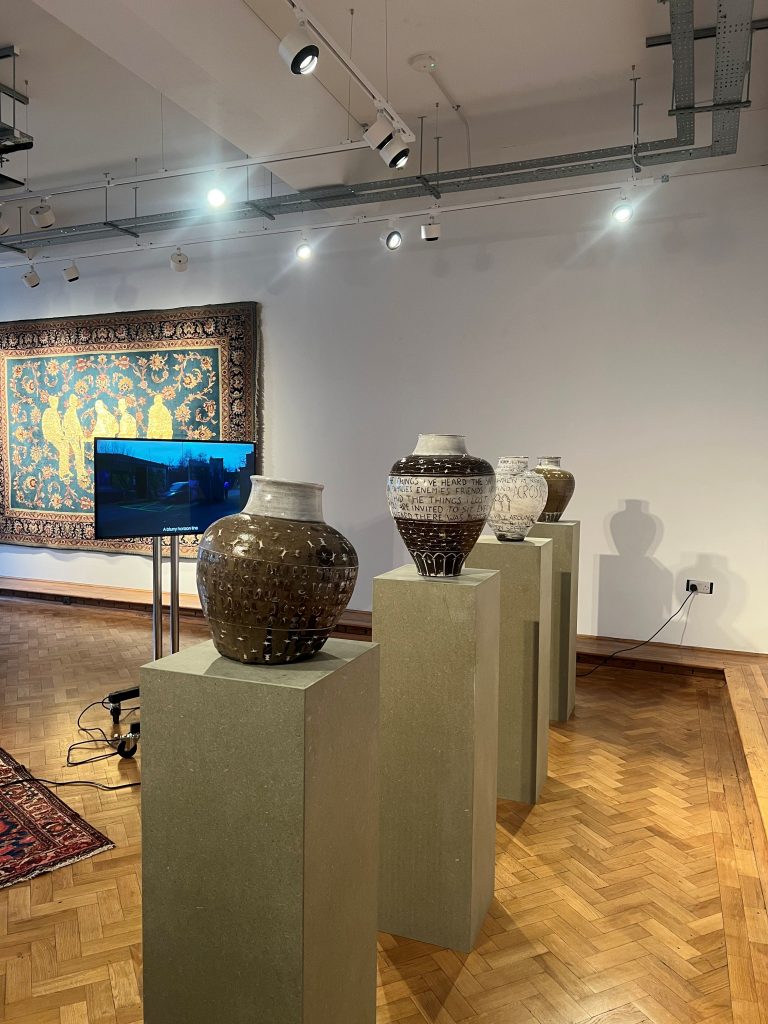
Surrounding the video installation, textiles made in the form of rugs and tapestries, and large ceramic jars with etchings of barbed wire and poetic text. I believe these elements are placed here to subvert the Westernised policies on borders, referencing Eastern traditions in weaving patterns in textiles, and pictorial symbols within ceramic motifs – which brings me to think about the finer, more delicate details. For example, personal memories or history of times before these borders had been enforced.
This opportunity in being able to visit Belfast’s art galleries has been both inspiring and educational, in my opinion the Naughton Gallery, the MAC, and Golden Thread Gallery are not only trailblazers in arts and culture for the North of Ireland, but are also safe spaces for learning and community engagement. I highly recommend visiting if you are travelling to, or local to the area.
Cami O’Hagan (Team Assistant) – December 2025